

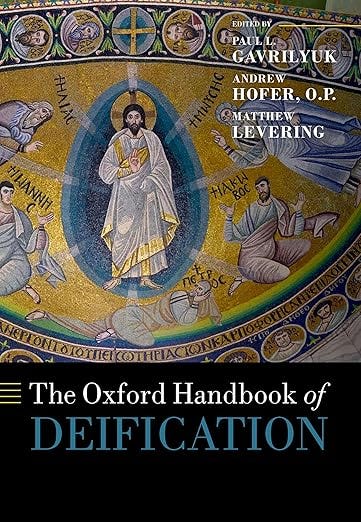
In this review article of The Oxford Handbook of Deification, I argue that our understanding of deification is determined, ultimately, not by empirical markers but by divine revelation: The question is whether or not a particular theology offers a faithful and true rendering of our final end. By offering some of my own thoughts on deification in dialogue with the authors of the Handbook, I make clear why a proper understanding of what deification is requires the essence-energies distinction. Only by accepting this traditional, patristic distinction can deification be properly participatory in character.

Still reading and thinking through this. It’s quite good and yet well beyond me. I do think one broad takeaway for me is that the participatory and deification understanding of union with God is far more profound and proficient in its understanding than anything I’ve encountered in Evangelicalism. Seems like they don’t really know what to do with Paul’s “in-Christ” language. Deification is such a wonderfully rich theological tradition I’m getting to explore, thank you for this article!
I found this handbook exceptionally helpful in helping signal where authors (ancient, medieval, and modern) were discussing deification. This helped me slow down and read closely for myself. Thank you!